


Data Security: Key Strategies to Protect Your Business’s Most Valuable Asset
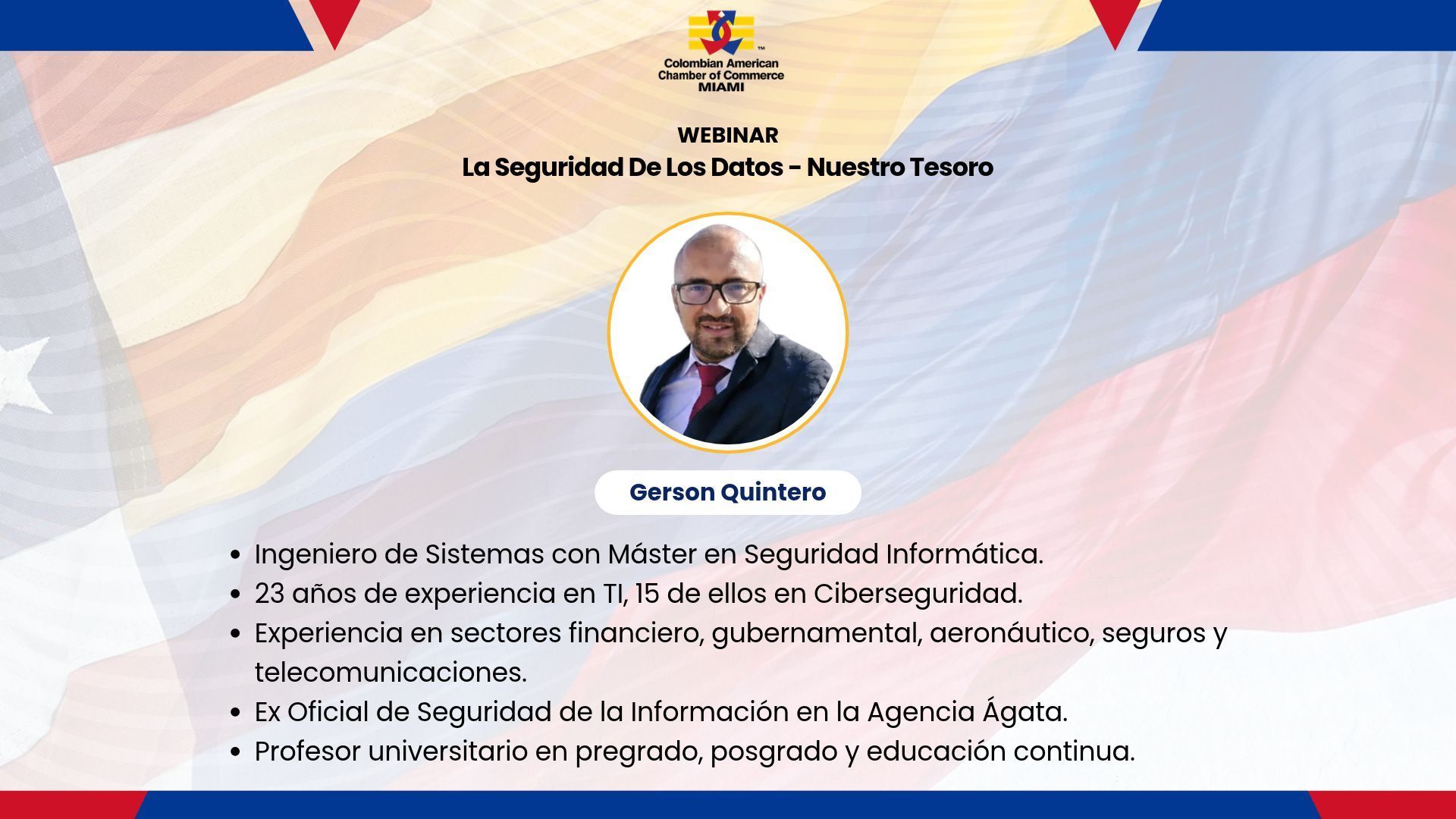
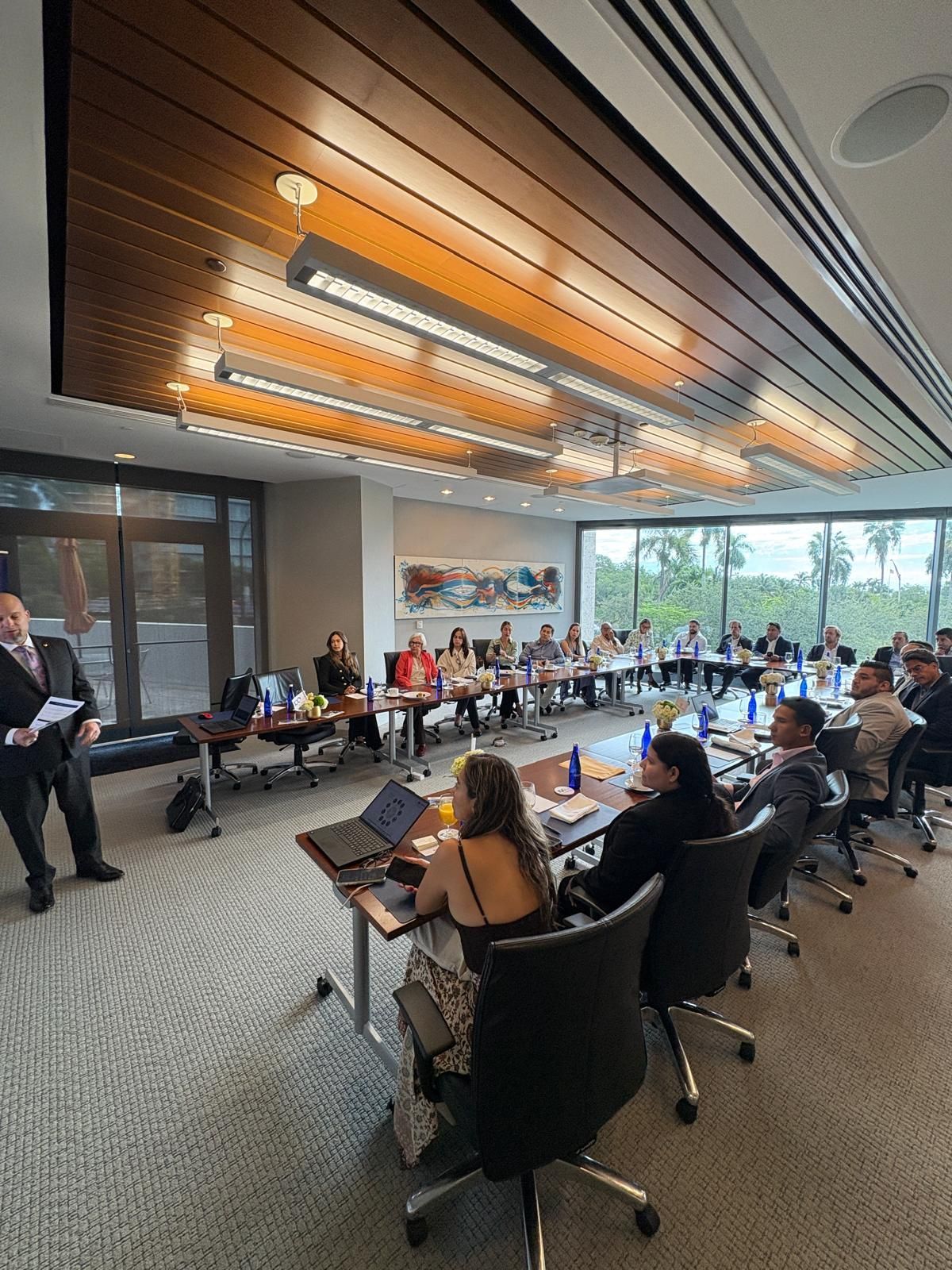
Last Wednesday, November 25, the virtual event “Data Security: Our Treasure” (La Seguridad de los Datos: Nuestro Tesoro) took place, organized by the Colombian American Chamber of Commerce Miami at 6:00 p.m. (Miami time). This space for connection brought together business leaders and community members to address corporate cybersecurity and data protection as strategic pillars in the era of artificial intelligence.
The session featured Gerson David Quintero, representing CyberdatAI LLC. A systems engineer with a master's degree in information security, Quintero brings 23 years of experience in information technology and 15 years in digital security across the financial, government, aviation, insurance, and telecommunications sectors.
From Technical Matter to Boardroom Priority
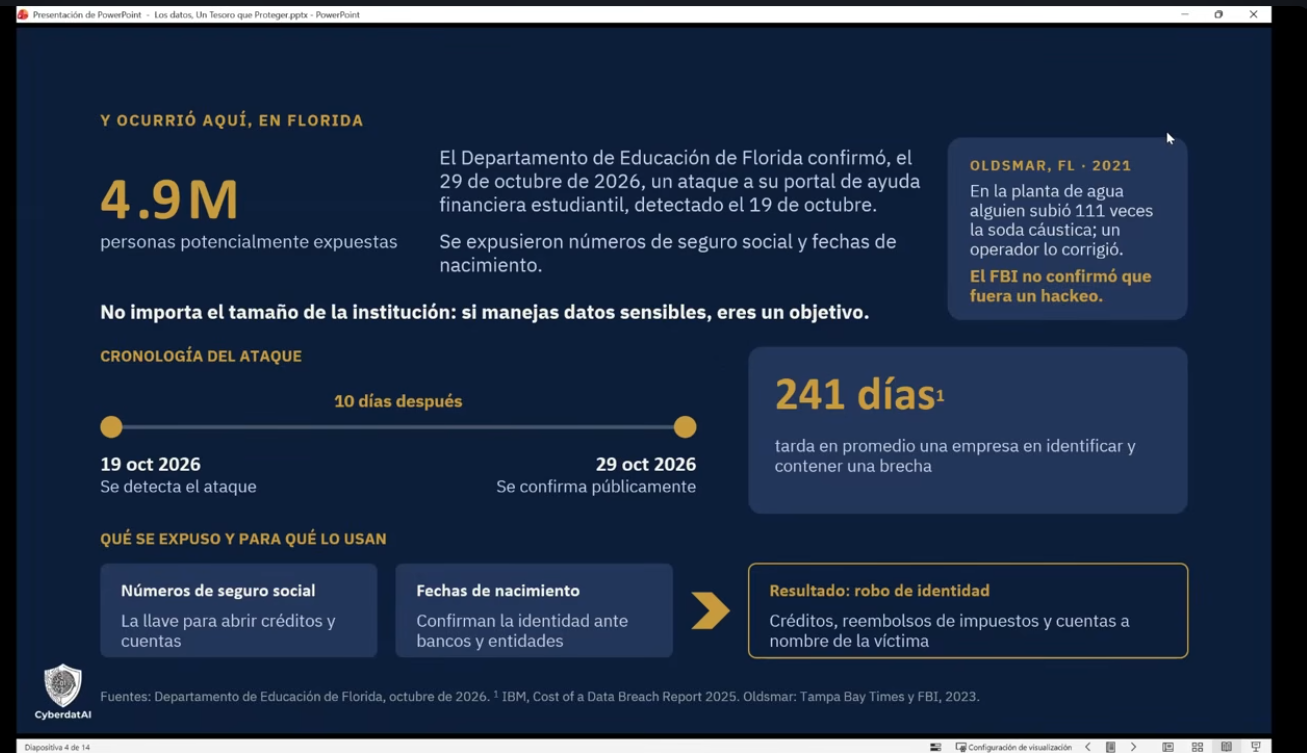
During the gathering, it was emphasized that information management has evolved from a purely operational matter into a central decision for boards of directors. In an environment where artificial intelligence accelerates the automation of digital processes, organizations of all sizes: small, medium, and large, must strengthen their safeguards and operational continuity capabilities. To illustrate the importance of preventive management, the speaker shared key reference figures on the financial impact of data exposure:
- $160 is the average cost per exposed customer record.
- $10.2 million represents the average cost of a data breach in the United States ($4.4 million globally).
- 250 days is the average time it takes an organization to identify unauthorized access within its systems.
Throughout the conversation, practical guidelines were shared so companies can optimize their security posture without relying solely on major technological investments
1. Asset Inventory and Zero Trust Architecture
The first step in safeguarding a company's information assets is identifying what sensitive data it manages and where it is hosted. Complementing prevention with a Zero Trust model enables continuous monitoring and improves detection capabilities in any situation.
2. Access Controls and Immutable Backups
Avoiding shared credentials, implementing password managers, and enabling multi-factor authentication (MFA) reinforce the daily protection of corporate accounts. Likewise, maintaining immutable backups (WORM type) outside the main network ensures the availability and autonomous recovery of information.
3. Third-Party Management and Leveraging Existing Tools
Overseeing security standards among third- and fourth-party vendors strengthens the supply chain and opens commercial opportunities with large corporations and federal agencies. Similarly, training teams and making full use of existing technological and artificial intelligence tools allows organizations to elevate their protection levels efficiently.
4. Timely Regulatory Compliance
Understanding current regulatory frameworks supports institutional trust. In Florida, the Florida Information Protection Act establishes a 30-day deadline to notify affected individuals and regulatory bodies in the event of data exposure, alongside international standards such as the European GDPR and Law 1581 in Colombia.
From the Colombian American Chamber of Commerce Miami, we extend an invitation to the entire business community to continue participating in and attending upcoming events, using these spaces for conversation to keep connecting, broadening your vision, and learning from real experiences that strengthen your decision-making.
Visit the Events Calendarto stay up to date with our upcoming events.